



Salesforce after go-live: what no one usually explains

Azimute
07/27/2026

Most conversations about Salesforce end at the go-live stage. The system is in production, the team has been trained, and the project is closed. What’s next? This is exactly where many companies are left without an answer. And without a partner.
Go-live is not the end of the implementation; it is the beginning of real usage. It is during this phase that questions arise which training couldn't anticipate, adjustments become necessary that only make sense with real data, and opportunities for evolution become visible once the team actually starts working in the system.
If you are evaluating a Salesforce consultancy, post-launch support must be at the center of the conversation. Azimute's services include maintenance, continuous support, and evolutionary consulting precisely because the value of Salesforce grows over time, it does not disappear after go-live.
Why post-implementation support is so important
A CRM is a living system. As the company grows, processes change, teams evolve, and business needs transform. A Salesforce instance configured for the company of two years ago may no longer reflect the company of today.
Without continuous support, the outcome is predictable: the team starts bypassing the system, data degrades, irrelevant fields appear that no one fills out, and processes no longer match reality. The CRM turns from an asset into a burden.
With active support, Salesforce keeps pace with the company. Problems are resolved quickly, configurations are adjusted as the business evolves, and the team always has someone to turn to for help.
What a good Salesforce support service should include
Fast resolution of technical issues
When something doesn't work as expected, the impact on the team is immediate. A good support service has defined response times and the ability to solve problems without creating a dependency on lengthy ticketing processes.
Continuous adjustments and optimizations
Company needs change. A new product, a team reorganization, or a change in the sales process, any of these can require adjustments in Salesforce. Continuous support ensures these changes are made in a structured way, without compromising what is already working.
System health monitoring
A well-maintained Salesforce environment does not accumulate silent problems like duplicate data, broken automations, integration errors, or outdated fields. Regular monitoring prevents small issues from turning into major headaches. If you have never reviewed the state of your CRM, the article on the signs that your Salesforce needs a technical audit can give you an idea of what to look for.
Continuous team training
Teams change. New employees join who weren't present for the initial training. Processes shift, altering how the system should be used. Support that includes continuous training ensures that adoption levels remain high as the company grows.
A well-supported Salesforce yields higher adoption rates, which directly impacts results. To understand the relationship between adoption and sales conversion, read the article on Salesforce adoption and the invisible cost in sales.
The difference between maintenance and evolution
Maintenance is ensuring the system continues to work as originally designed. Evolution is ensuring the system remains relevant to the business the company is today. They are two distinct concepts, and both are entirely necessary.
Maintenance covers Salesforce platform updates, bug fixes, minor adjustments, and system monitoring. Evolution covers the introduction of new modules, automating previously manual processes, integrating with new tools, and expanding CRM usage into other areas of the company.
A good Salesforce partner doesn't wait for the client to ask to evolve. They proactively bring improvement suggestions based on what they observe in the system and the market.
How Salesforce should evolve with the business
Salesforce is a platform with enormous depth. Most companies start by using just a fraction of its potential and expand as the team gains confidence and the business grows.
A common trajectory begins with Sales Cloud for sales pipeline management, advances to more sophisticated automations, incorporates customer service and support features, and eventually expands to analytics and data intelligence. Each phase creates the right conditions for the next.
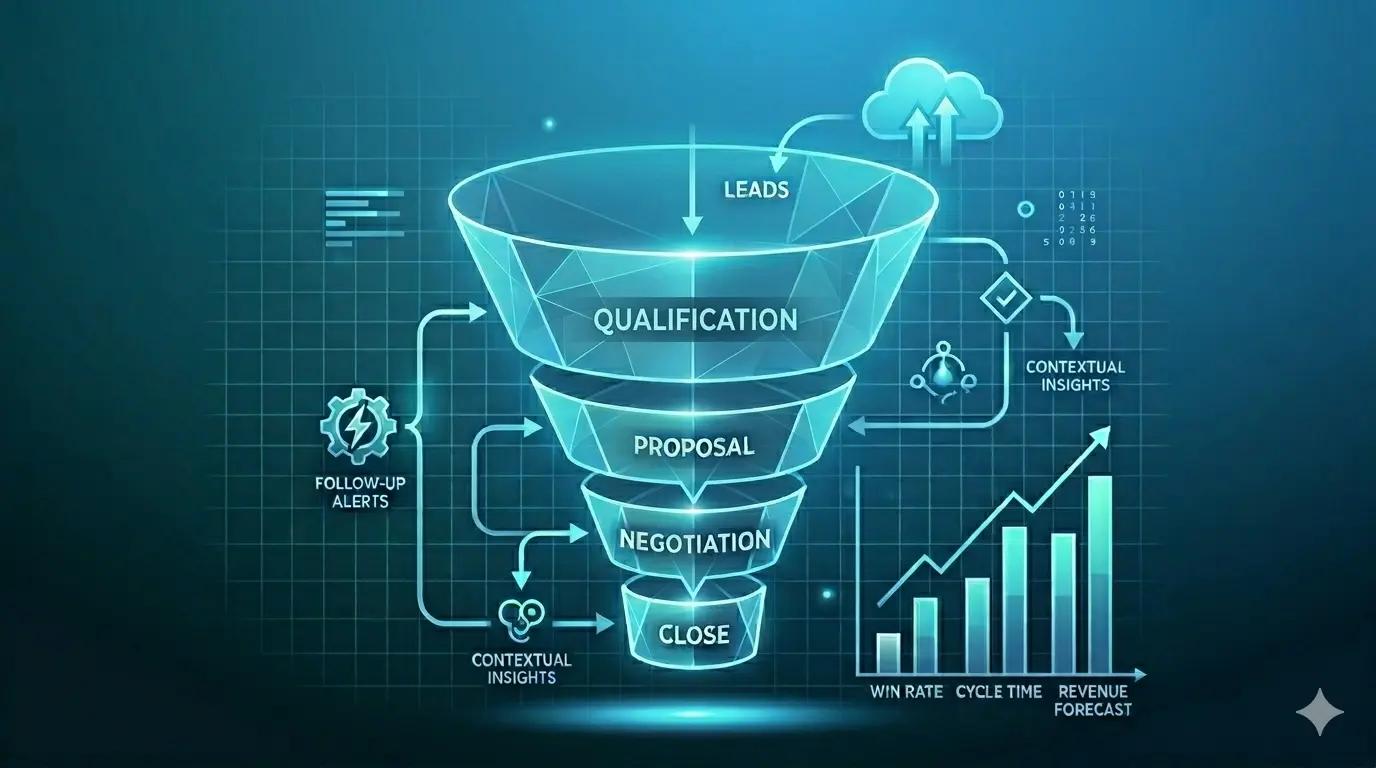
The sales pipeline is usually the first visible benefit of a well-configured and maintained Salesforce. To understand how the CRM directly influences conversion rates, read the article on how Salesforce converts more at each stage of the pipeline.
As the system evolves, it is also possible to activate self-service and customer service automation features that reduce the operational load on your teams. The article on smart FAQs and self-service with Salesforce shows how this evolution happens in practice.
What to ask your Salesforce partner about support
Before signing off on any implementation project, these questions must have clear answers:
- What is the guaranteed response time for critical issues?
- Does the support include adjustments and optimizations, or just bug fixing?
- How is the training of new team members handled?
- How frequently is a system health review performed?
- Does the partner proactively bring evolution suggestions, or do they only respond to requests?
The answers to these questions say much more about the quality of the partner than any certification or client list.
A partner, not a vendor
The distinction between a partner and a vendor is simple: a vendor delivers the project and moves on to the next one. A partner stays, guides, and grows alongside the company.
In the context of Salesforce, this difference is particularly relevant. The platform evolves regularly, the business changes, and teams transform. A company with an active partner by its side gets much more out of its investment than one left to fend for itself after go-live.
Salesforce is a long-term asset
If you are just starting your Salesforce implementation, read the article on how a Salesforce implementation works and what to expect at each stage first. If you already have the system in production and feel you aren't fully leveraging its potential, the starting point is to understand exactly where the problems lie.
In either case, talk to the Azimute team. We provide a no-obligation diagnosis and help identify the most relevant next step for your business.
Azimute
07/27/2026



Frequently Asked Questions
Latest articles See all articles

Salesforce implementation: steps and what to expect
Discover the real steps, the timelines involved, and what to expect from a Salesforce specialist.
Azimute
07/15/2026

The biggest obstacle to conversion is inside your company
When the team doesn’t use the CRM, the pipeline lies and conversion drops.
Azimute
06/26/2026
From lead to close: how Salesforce converts more
How Salesforce eliminates sales pipeline leaks and converts more leads into customers.
Azimute
06/15/2026